
Consumer Investigation · Jewelry Materials
8 min read
The Bracelet You’re Wearing Right Now Is Not What You Think It Is
Take it off. Look at the inside — the part that sits against your skin. The part you never see when you’re wearing it.
Is the color the same as the outside? Or is there a spot — maybe near the clasp, maybe where it rubs against your wrist — where the surface is wearing through and something different is showing underneath?
That something — the metal underneath the coating — is what’s actually been touching your skin. Not the gold tone. Not the silver tone. Not the rose gold. The thing they hid underneath.
And the brand that sold it to you? They knew it was there. They chose not to tell you.
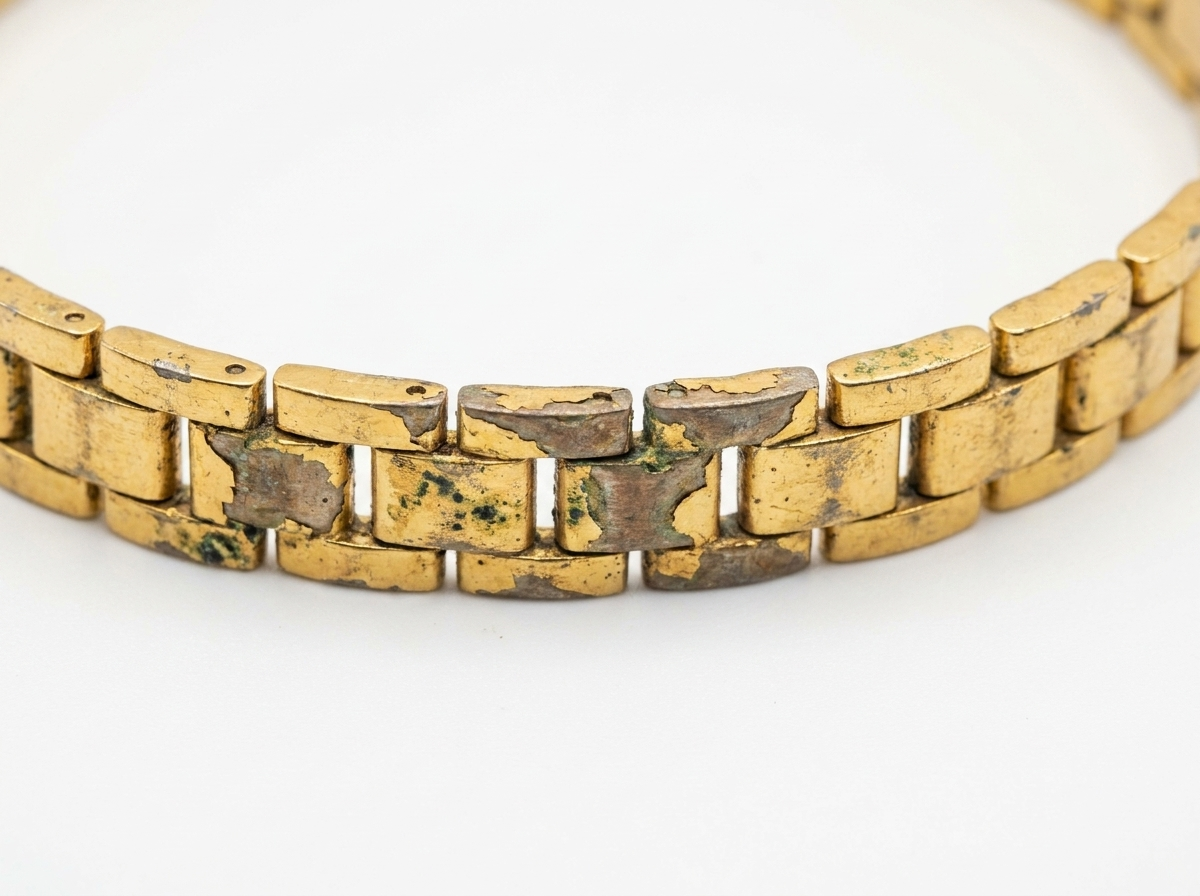
The jewelry industry has a material honesty problem
Every other product that touches your body is required to tell you what’s in it. Food. Skincare. Cleaning products. Fabric. The law says you have a right to know what you’re putting on your skin.
Jewelry is the exception. There is no federal requirement for jewelry brands to disclose what metals are inside their products. No ingredient list. No material breakdown. No obligation to tell you that the bracelet labeled “gold-plated” is actually zinc and nickel underneath a coating thinner than a human hair.
The words they use — “hypoallergenic,” “nickel-free,” “surgical grade” — are not regulated. There is no certification body. No testing requirement. No enforcement.
This isn’t a gap in the system. It’s the system working exactly as the industry designed it: sell the coating, hide the core, and let the customer blame their own skin when it reacts.
What’s actually inside the jewelry they sold you
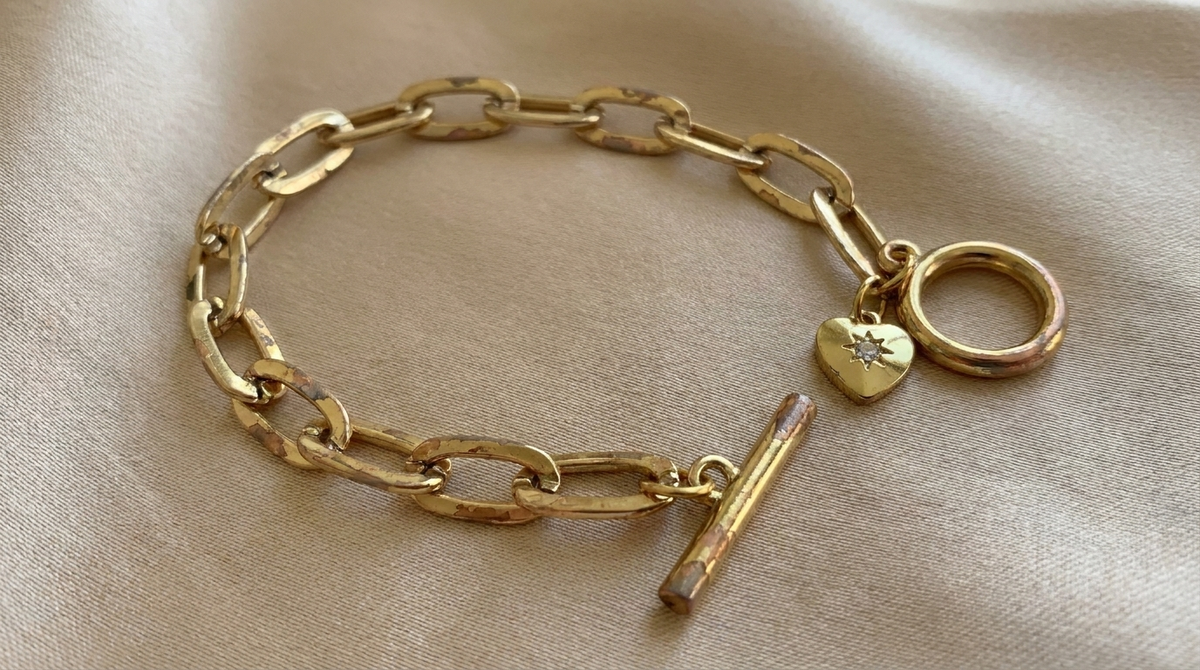
Most jewelry — at every price point — is constructed the same way: a thin coating of one metal sprayed or electroplated over a core of something cheaper. That coating is measured in microns. You’d need a microscope to see how thin it is.
The core is where the problem lives. It’s usually nickel, zinc, aluminum, or an alloy the brand won’t name — “proprietary blend” is the industry’s way of saying “we won’t tell you.”
The coating’s job isn’t to protect you. It’s to delay the moment you find out what’s underneath. To get you past the return window. To make the bracelet look like gold or silver long enough for the brand to keep your money.
When the coating wears through — and it always wears through — the base metal starts touching your skin directly. That’s when the itch starts. The redness. The rash in the exact shape of whatever you were wearing.
That reaction isn’t your body being “sensitive.” It’s your body doing exactly what it should do when a hidden allergen is pressed against it for twelve hours a day without your knowledge or consent.
What they put inside vs. what should be there
We pulled apart the claims. Here’s what the jewelry you’ve been buying actually contains — compared to a bracelet that has nothing to hide.
| Cheap plated jewelry | “Premium” fashion brands | Cavizio | |
|---|---|---|---|
| What’s inside | Zinc or nickel core, thin coating on top | “Proprietary alloy” — they won’t tell you | 100% solid copper. That’s the whole answer. |
| Material disclosure | None — not legally required | “Trade secret” — they choose not to | Fully disclosed. One material. Nothing hidden. |
| Coating lifespan | Wears through in 1–4 weeks | Wears through in 2–6 months | No coating. Same metal day 1 as day 1,000. |
| Nickel content | Present — undisclosed | Possibly present — undisclosed | Zero. No nickel. No alloy. No mystery metals. |
| What touches your skin at week 3 | The hidden base metal — not what you paid for | Degrading coating over unknown core | The same solid copper. Unchanged. |
| Construction | Machine-stamped overseas | Machine-stamped, branded packaging | Hand-made in Italy. Every piece. |
One column discloses its material. One column has nothing to hide at week three. One column is the same bracelet on day one thousand as it was on day one. It’s always the same column.
How many times they expect you to come back
Here’s the business model the industry doesn’t advertise: a bracelet that lasts forever is a bracelet they sell you once. A bracelet that degrades in six months is a bracelet they sell you twice a year. For your whole life.
The coating isn’t a manufacturing limitation. It’s a strategy. Build it to fail slowly enough that you blame yourself instead of the product.
You don’t have sensitive skin. You have jewelry that was designed to deteriorate on a schedule.
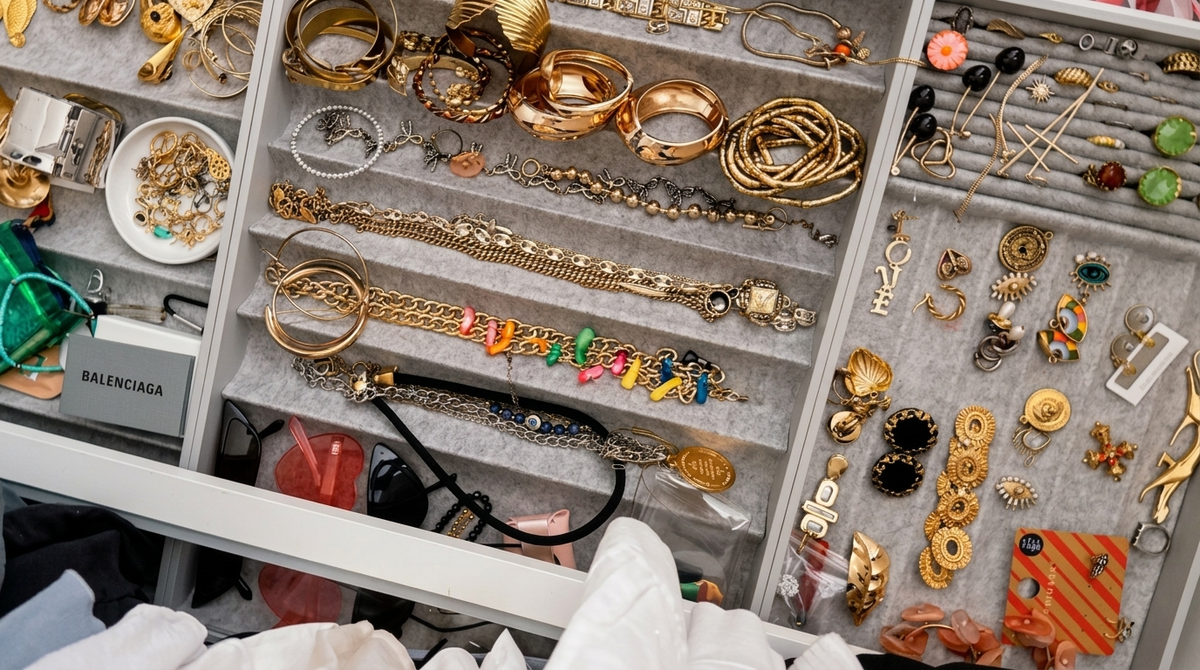
The drawer full of abandoned bracelets in your bedroom isn’t a collection of bad luck. It’s the accumulated evidence of an industry that profits from selling you the same lie on repeat.

What happens when the bracelet has nothing to hide
I wore nothing on my wrists for two years after my last reaction. Two years. I’d been burned by cheap brands and expensive brands. By “hypoallergenic” labels and “premium alloys.” By every word the industry uses to avoid the one thing they won’t say: what’s actually inside.
Then a friend showed me a bracelet. Solid copper. Not copper-plated. Not copper-toned. Copper — 100%, all the way through, hand-made in Italy. A brand called Cavizio.
I asked the question I now ask before anything goes on my skin: “What is this made of?”
The answer was one word. Copper. Not “a proprietary blend featuring copper.” Not “copper-infused alloy with hypoallergenic properties.” Copper.
I put it on. And I waited. The way you wait when you’ve been trained to expect pain.
Day three — nothing. Day seven — nothing. Day fourteen — I stopped checking. Day thirty — I forgot I’d ever had to check.
Seven months. Not a single reaction. Because there’s nothing hidden to react to.
Why this works when everything else gave you a rash
Every piece of jewelry that ever irritated your skin had the same structural problem: it was two metals pretending to be one. A pretty coating over a cheap core. The moment the coating failed, the core attacked.
Cavizio doesn’t have two layers. It doesn’t have a coating. It’s one material — solid copper, the same thing on the outside as the inside, the same on day one as on day one thousand.
Copper is a trace element your body already contains. It’s in your blood. Your cells. Your connective tissue. When solid copper sits against your skin, your body recognizes it — unlike nickel, which your immune system correctly identifies as something that doesn’t belong there.
Your skin was never the problem. The two-layer lie was the problem. Remove the lie, remove the reaction. It’s that simple.
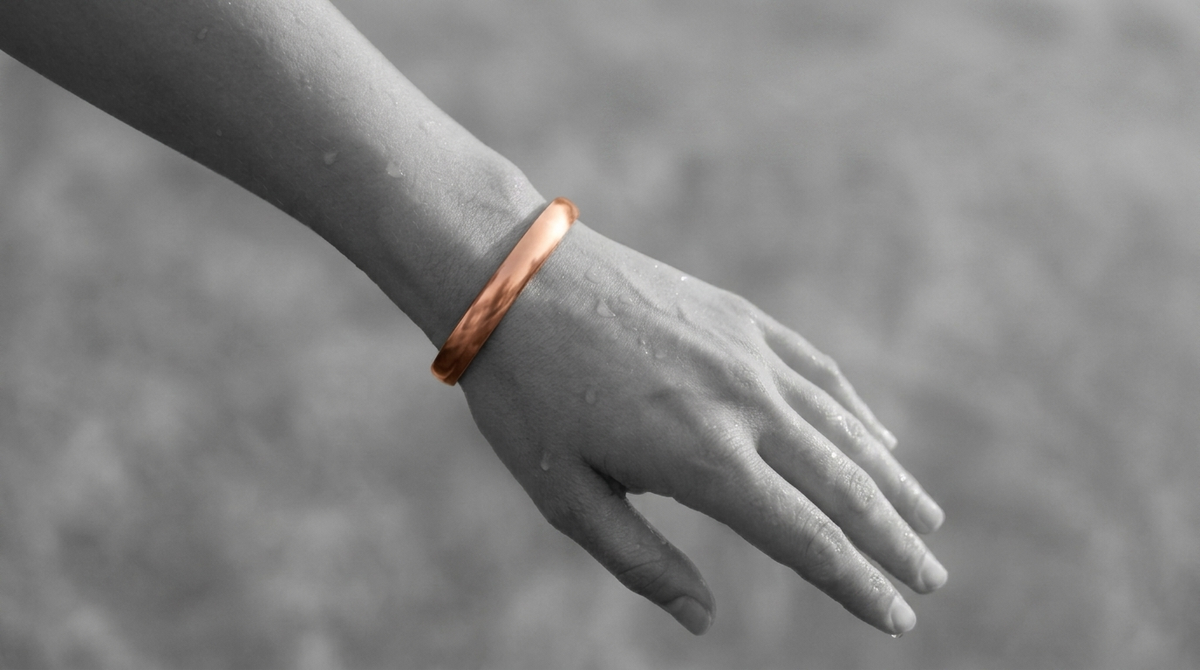

Cavizio Pure Copper Cuff
The bracelet that answers the material question before you ask it.
What you’re actually getting
Cavizio makes one product. A bracelet. 100% solid copper, hand-made in Italy by craftsmen who have worked with copper for generations. No plating. No base metal. No alloy. No mystery underneath.
It’s also — and this is the part that surprised me — the most beautiful bracelet I’ve ever owned. The warm copper tone is richer and more complex than anything gold-plated. The weight is substantial — you feel the quality the moment you pick it up.
This isn’t a medical device. It’s not a compromise. It’s the piece of jewelry you’d choose first even if you had no skin concerns at all — that happens to also be the only bracelet that’s told you the truth about what it’s made of.
The most radical thing about this bracelet isn’t the material. It’s the honesty.


100% Copper
Solid, not plated
Zero Nickel
Zero hidden metals
Hand-Made
Italian craft
More Value
Two for one
From women who stopped trusting the jewelry industry — until this
“Every bracelet I’ve ever bought gave me a rash within two weeks. I assumed I was allergic to metal. Turns out I was allergic to nickel that no brand ever told me was inside their product. Cavizio was the first bracelet that told me the truth about what I was putting on my skin. Seven months, zero reactions.”
— Verified Cavizio customer
“I called a $70 bracelet brand and asked them to tell me what metals were inside their product. They said ‘proprietary alloy’ and refused to disclose. That was the day I realized the entire industry is built on not telling you what you’re paying for. Cavizio’s answer was one word: copper. That’s why I bought it.”
— Verified Cavizio customer
“I wore nothing on my wrists for three years because of reactions. My daughter bought me a Cavizio and I was genuinely scared to put it on. That was eight months ago. I haven’t taken it off since. Not one itch. Not one red mark. Not one moment of wondering what’s underneath — because there’s nothing underneath. Just copper.”
— Verified Cavizio customer
“The weight is what tells you immediately. Every cheap bracelet I’ve ever owned felt hollow and light. This feels solid. Like it’s made of one thing. Because it is. You can feel the difference in your hand before you even put it on. And you can feel the difference on your skin every day after.”
— Verified Cavizio customer
What is this made of? Copper. That’s it. One material. Fully disclosed. Hand-made in Italy. Give the second to someone who’s still blaming their skin for what the jewelry did.

Cavizio Pure Copper Cuff
Hand-made in Italy · 100% Solid Copper
Free shipping · Satisfaction guaranteed
No coating to dissolve. No base metal to expose. No reaction on day three, day thirty, or day three hundred. The same copper touching your skin right now is the same copper touching your skin a year from now.
The jewelry industry trained you to call yourself “sensitive.” To treat your skin’s reaction to a hidden allergen as your body’s failure instead of their deception. To keep buying, keep reacting, keep blaming yourself, keep filling that drawer.
You were never sensitive. You were lied to. About what was inside the bracelet. About what “hypoallergenic” means. About what “gold-plated” is hiding. About the nickel pressed against your skin twelve hours a day that no one disclosed because no one had to.
Now you know what the industry didn’t want you to ask. And now there’s a bracelet built by people who answered the question before you had to.
One material. Fully disclosed. Nothing to hide. That’s the whole story — and it’s the first honest one the jewelry industry has told you.